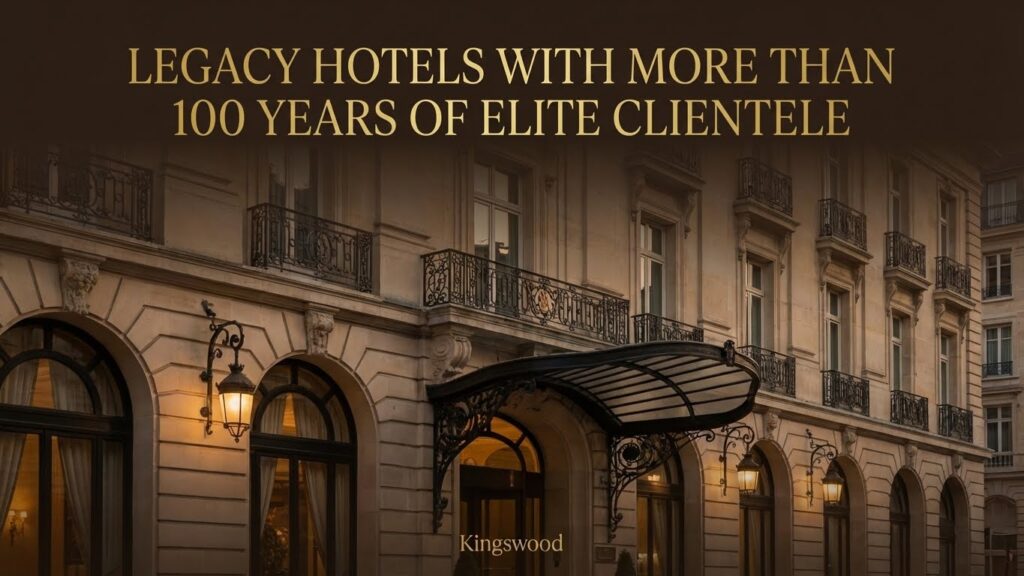
Legacy Hotels With Over 100 Years of Elite Clientele
For a certain class of traveller, a hotel is more than a place to sleep. It is a neutral stage for negotiations, a discreet refuge between jurisdictions, and a long-running ledger of who mattered in a given century.
The properties below have hosted heads of state, magnates, writers and entertainers for more than 100 years. Their guest lists are not just trivia; they are a proxy for the hotel’s ability to deliver privacy, consistency and service at the very top of the market.
This Kingswood report looks at six such “legacy hotels” across Europe, Asia and North America – including two additions in Switzerland and Italy – with an emphasis on history, clientele and strategic location rather than glossy excess.
Raffles Hotel, Singapore (Opened 1887)
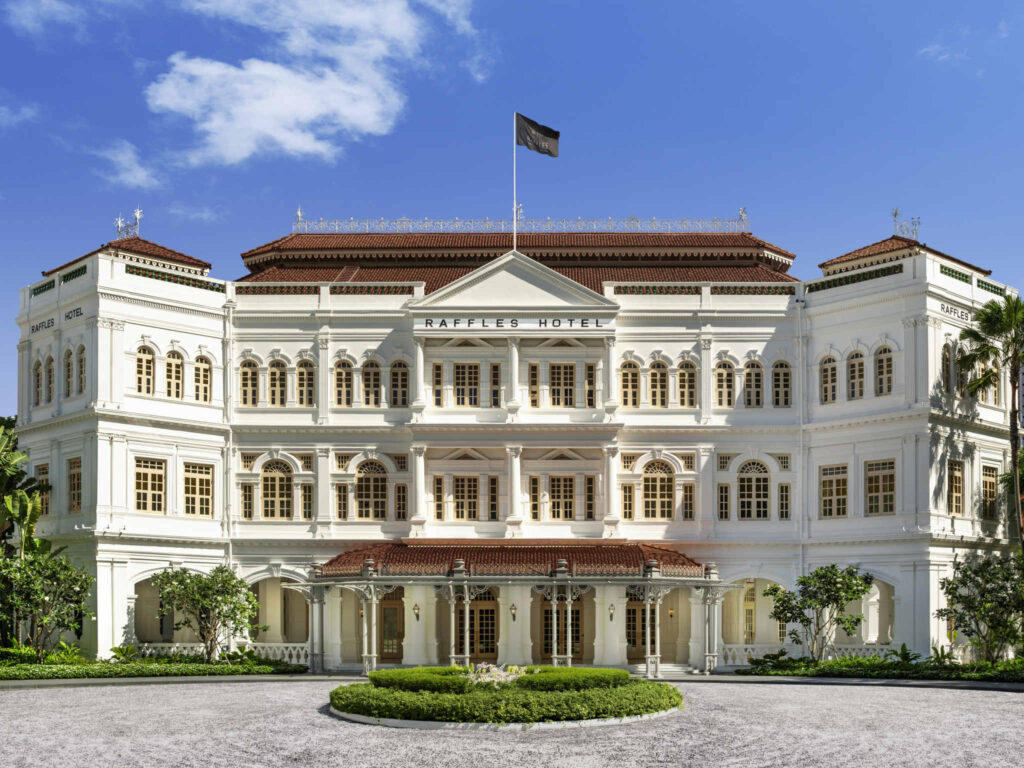
Raffles began as a 10-room seaside lodge opened by the Sarkies brothers in 1887 and evolved into Singapore’s defining grand hotel. Its 2019 restoration brought the building back to its late-19th-century proportions while quietly upgrading everything that matters to contemporary travellers.
The hotel has long marketed itself as “Patronised by Royalty and Nobility,” and the claim is unusually accurate. Queen Elizabeth II, Prince William and Catherine, Charlie Chaplin, Michael Jackson and Johnny Depp have all stayed at Raffles, turning it into a kind of recurring annex of global soft power.
Rudyard Kipling and Joseph Conrad helped popularise the then-new hotel among European travellers, and W. Somerset Maugham later used it as material, famously remarking that “Raffles stands for all the fables of the exotic East.” Today its Writers Bar leans into that heritage, making the property a predictable, almost ritualistic stop for authors and publishers moving through Asia.
For strategically minded travellers, Raffles offers three things: a heritage building that still feels intimate, a location at the political and commercial core of Singapore, and an environment in which very senior people can appear in public without feeling observed.
Hôtel de Paris, Monte-Carlo (Opened 1864)
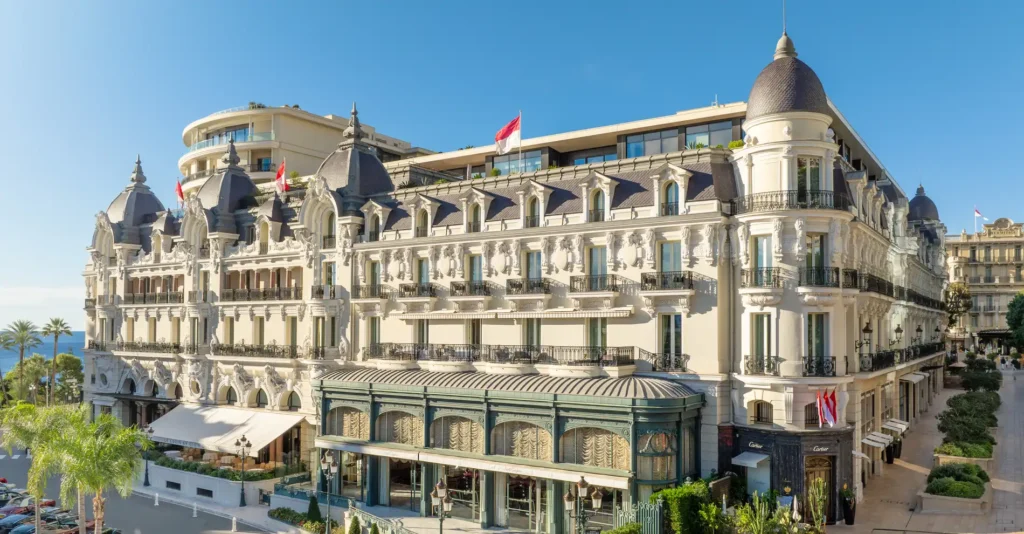
Built in 1864 to anchor the new Casino de Monte-Carlo, the Hôtel de Paris quickly became the ceremonial living room of Monaco’s emerging financial elite. From the late 19th century it hosted grand balls and charity galas that effectively functioned as informal networking events for Europe’s wealthiest families.
Rockefeller, Rothschild and Vanderbilt family members all “made themselves at the hotel,” using it as a base for Riviera seasons and casino visits, alongside press baron Gordon Bennett and other high-profile industrialists. After World War II, names like the Duke and Duchess of Windsor, Winston Churchill and Errol Flynn reinforced its reputation as Monaco’s de facto salon of power and spectacle.
The hotel’s importance extends beyond celebrity. Its terrace and dining rooms are within walking distance of the principality’s banking, family-office and residency infrastructure. For HNWIs and their advisers, the Hôtel de Paris is both stage and backstage: one can host a foundation dinner in the evening and quietly meet lawyers or bankers in the morning without ever leaving Casino Square.
The Ritz, London (Opened 1906)
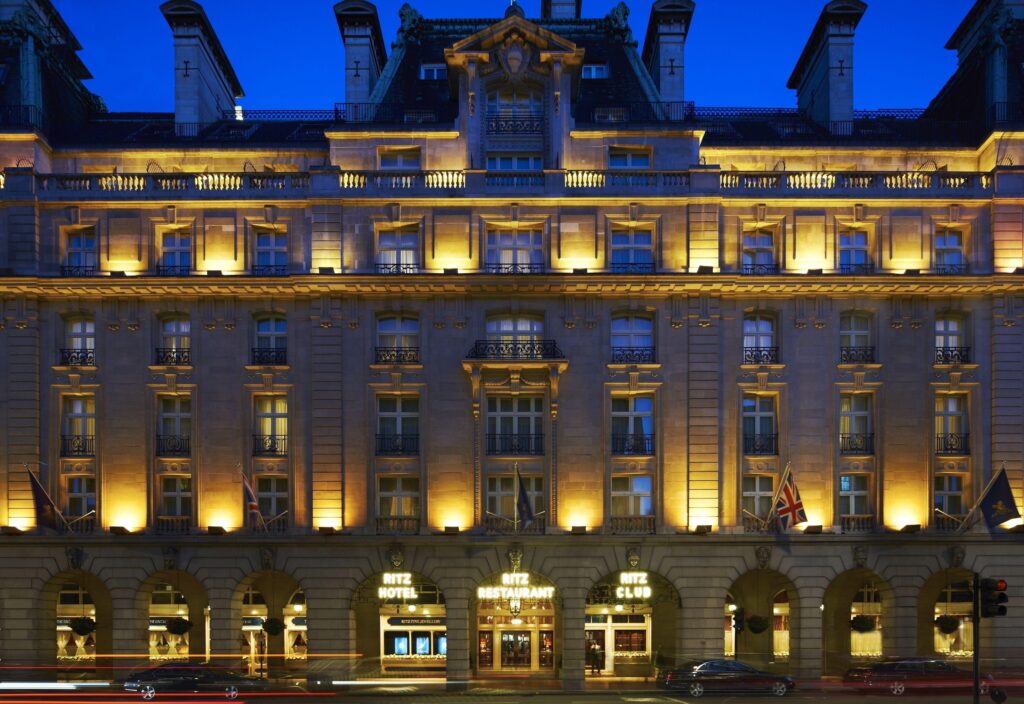
César Ritz opened The Ritz in 1906 with the explicit aim of redefining London luxury. The property rapidly became the preferred address of King Edward VII, who was reputed to have said, “Where Ritz goes, I go.”
During the Second World War, the Marie Antoinette Suite at The Ritz served as an informal Allied meeting point, hosting discussions between Winston Churchill, General Eisenhower and Charles de Gaulle – a reminder that grand hotels often sit closer to strategy than their polished public image suggests.
Across the 20th century, the guest list reads like a cross-section of political and cultural capital: Charlie Chaplin, Anna Pavlova, Noël Coward and First Lady Jackie Onassis. British prime ministers Harold Wilson, Edward Heath and Harold Macmillan lunched here regularly, turning certain tables into informal policy forums.
For a serious traveller, The Ritz is less about conspicuous display and more about predictable standards: a Grade II listed building with rigid service rituals, in Mayfair, within a short radius of embassies, hedge-fund offices and the West End.
The Plaza Hotel, New York City (Opened 1907)
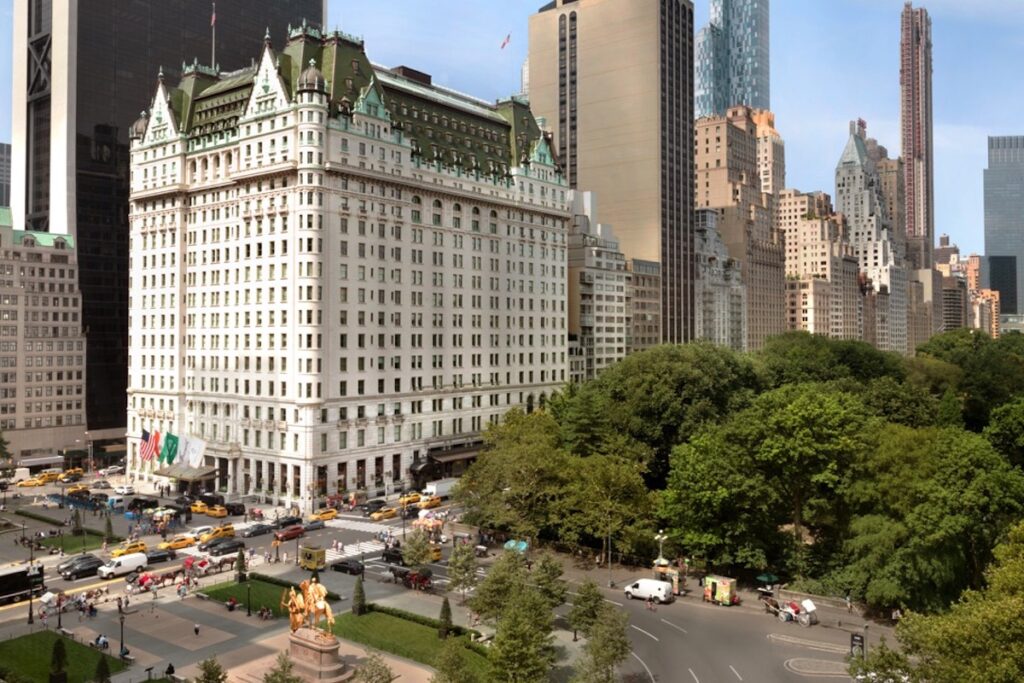
Opened in 1907 on Fifth Avenue at the edge of Central Park, The Plaza was conceived as a residential palace for America’s new industrial elites. At launch, roughly 90% of the units were expected to be long-term residences, and the architecture reflected permanence rather than transience.
Over time, The Plaza’s guest book has mirrored New York’s rise as a financial and cultural centre. Enrico Caruso, F. Scott and Zelda Fitzgerald, and architect Frank Lloyd Wright all lived or worked out of suites here. The Beatles occupied the hotel during their first U.S. visit in 1964, turning its façade into a temporary global stage.
Politically, the hotel has hosted U.S. presidents from Theodore Roosevelt onwards, as well as countless fundraising dinners, diplomatic receptions and corporate mergers in its ballrooms. Today the building is a split between condominiums and hotel rooms, but the Palm Court and ballroom still function as an extension of New York’s boardrooms and embassies.
For globally mobile capital, The Plaza is best understood as established territory: a place where the staff and spaces are used to high-stakes transactions, and where the building itself is integrated into the city’s regulatory, social and media infrastructure.
Beau-Rivage, Geneva (Opened 1865)
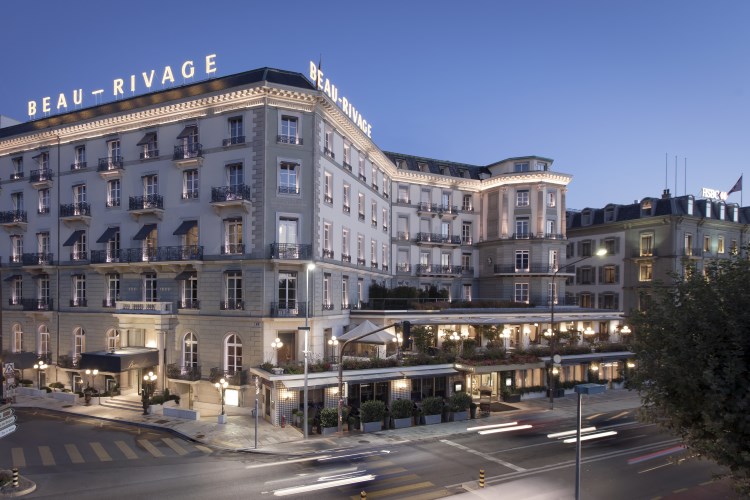
Geneva’s Beau-Rivage, founded in 1865 and still owned by the Mayer family, is a model of the Swiss approach to legacy hospitality: small scale, family-run, and intensely focused on discretion. With just 90 rooms and suites facing Lake Geneva, it functions more like a private house than a mega-hotel.
Despite its size, Beau-Rivage has played host to events that shaped European history. Charles II, Duke of Brunswick, died here in 1873, leaving a vast fortune to Geneva that helped fund major civic buildings. In 1898, Empress Elisabeth of Austria (“Sisi”) was staying at the hotel when she was attacked by an anarchist on the lakeside promenade and later died of her injuries.
In 1918, the Czechoslovak Declaration of Independence was signed at Beau-Rivage, underlining its role as a neutral meeting point for statesmen using Geneva as diplomatic ground. The hotel also claims Switzerland’s first elevator, installed in the 19th century as a gesture toward technological comfort.
For Kingswood’s audience, Beau-Rivage sits at the intersection of lifestyle and jurisdictional strategy: a boutique palace in a city that houses the UN, numerous NGOs and a dense cluster of private banks. Its scale and family ownership make it appealing to those who value continuity of service and understated privacy.
Hotel Danieli, Venice (Hotel since 1822)
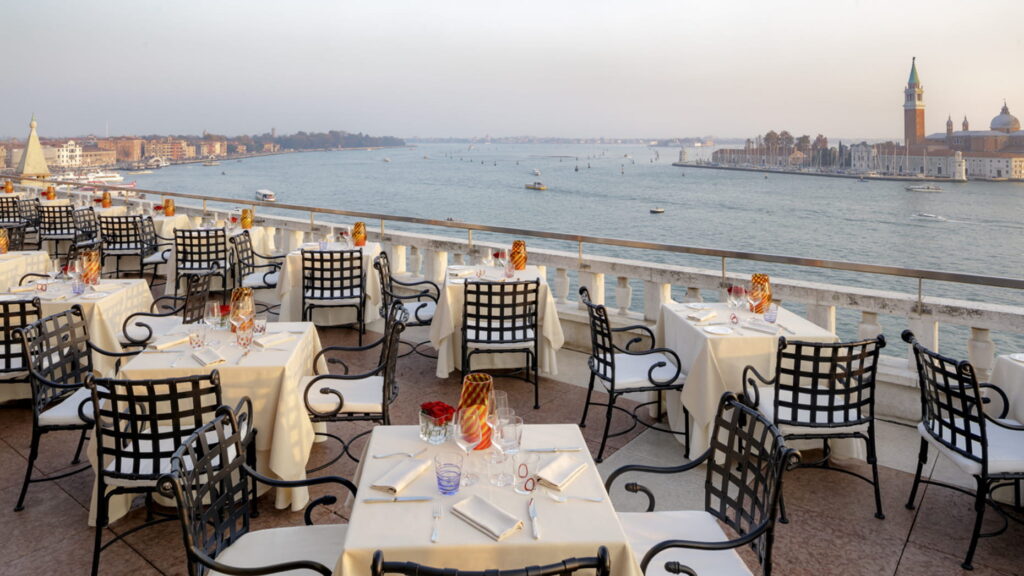
Venice’s Hotel Danieli is less a hotel than a repurposed patrician palace. Its central wing, the Palazzo Dandolo, was built in the late 14th century by the Dandolo family, who produced multiple doges of the Venetian Republic.
In 1822, Giuseppe Dal Niel (“Danieli”) rented the first floor, recognised the potential in its lagoon-side position, and converted the building into a luxury hotel. Since then, Danieli has been a magnet for artists, writers, musicians and – more recently – Hollywood and fashion figures.
Guests have included Goethe, Wagner, Charles Dickens, Henry James, Peggy Guggenheim, Katharine Hepburn, Coco Chanel, Madonna, George Clooney and Steven Spielberg.
Its position overlooking the lagoon, steps from the Doge’s Palace and St Mark’s Basilica, places it at the centre of Venice’s ceremonial geography. The hotel embodies the transition from aristocratic Venice to modern cultural tourism while retaining its palace-like atmosphere.
Today, as it transitions into Four Seasons management after a major renovation, Danieli remains one of Venice’s most recognisable addresses – effectively a bridge between palace culture and modern UHNW travel.
Why These Hotels Still Matter
- Longevity of elite patronage
These hotels have remained relevant to the same strata of guests – monarchs, magnates, diplomats, and marquee artists – for over a century. - Strategic geography
Singapore, Monte-Carlo, London, New York, Geneva and Venice sit at intersections of capital, law and culture. Staying in these hotels places travellers inside longstanding networks. - Calibrated discretion
None of these properties are hidden, yet each has mastered the balance between visibility and anonymity. For globally mobile families, that mix is part of their enduring value.
For Kingswood, these hotels are not merely lifestyle markers; they are functional infrastructure for international life — reliable, historically aware bases from which serious people have conducted their affairs for more than a century, and from which many continue to do so today.